

Here is how network builders and vehicle integrators spec their GNSS hardware.
1. The CORS Standard: The Choke Ring
If you are broadcasting NTRIP corrections to hundreds of regional rovers, your base station cannot move by a single millimeter.
The choke ring antenna is designed for permanent, static infrastructure. Its heavy concentric rings physically deaden ground-bounced signals, providing the ultimate phase center stability. However, this massive footprint creates a high wind load. When mounted on a tall communications tower, a choke ring requires heavy-duty steel bracketing to prevent wind shear from vibrating the mast and ruining the coordinate reference. Additionally, its open-ring design requires an external conical radome to prevent snow and ice accumulation.
2. The Fleet Integration Reality: The Mushroom Antenna
While the choke ring dominates static towers, it is physically impossible to mount on an autonomous tractor, a mobile surveying pole, or a commercial UAV fleet.
The "mushroom" antenna is the undisputed standard for mobile RTK nodes. Its low-profile, aerodynamic radome drastically reduces wind resistance, ensuring the internal PCB solder joints do not shatter under continuous vehicle vibration. Molded from IP67-rated polycarbonate, it naturally sheds heavy rain and snow without requiring secondary protective domes.
3. The Infrastructure Verdict
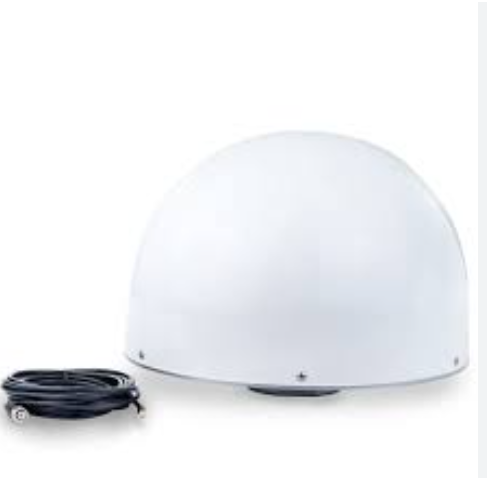
For a foolproof RTK ecosystem, hardware deployment is strictly divided by function. Deploy the heavy choke ring on your permanent structural rooftops where absolute signal purity outweighs installation costs. Deploy the rugged, aerodynamic mushroom antenna on your mobile rovers to guarantee agile, vibration-resistant centimeter tracking.
Need Industrial GNSS Infrastructure? We manufacture precision choke ring antennas for CORS networks and rugged mushroom antennas for mobile RTK integration. Cut out the middleman and secure your supply chain. [Contact Our RF Engineers for B2B Wholesale Pricing]