

When scaling an industrial IoT network—whether it is a smart city LoRaWAN grid, a Helium gateway, or an agricultural sensor array—your base station is the heart of the system. A high-powered transceiver module means nothing if your antenna setup bleeds RF energy before the signal even reaches the air.
For permanent tower or rooftop deployments, hardware integrators universally specify an outdoor base station mushroom antenna. Here is the engineering breakdown of how to spec this hardware for maximum Sub-GHz range.
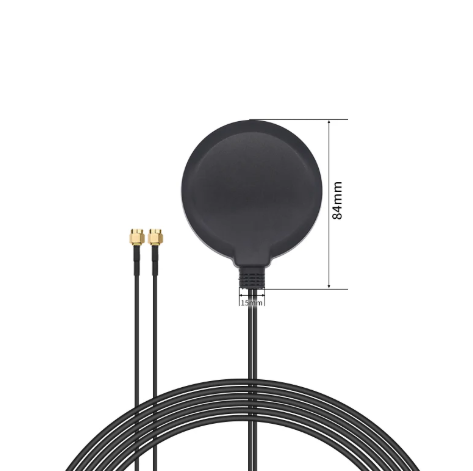
1. Sub-GHz Resonance and Omni Coverage
IoT protocols typically operate on Sub-GHz bands (such as 868MHz in Europe or 915MHz in the US) to penetrate concrete buildings and dense foliage.
A standard indoor whip antenna has a narrow bandwidth and poor VSWR outdoors. A professional base station mushroom antenna utilizes a precision-tuned internal copper or brass dipole array. This architecture guarantees a true 360-degree omnidirectional radiation pattern with a perfectly flattened elevation plane, pushing your gateway's signal out to the absolute maximum horizontal horizon.
2. Defeating Cable Insertion Loss
The biggest mistake IoT installers make is using thin, cheap coaxial cables (like RG58) for outdoor base stations. At Sub-GHz frequencies, every meter of cheap cable burns away your RF gain.
A true industrial mushroom antenna is designed to integrate seamlessly with heavy-duty, low-loss cables like LMR400. To support this thick cabling, the antenna base is equipped with a heavy-duty N-Type Female connector. Unlike fragile SMA ports, the N-Type termination provides a massive surface area for power transfer, exceptional mechanical strength, and a flawless waterproof seal when wrapped with self-amalgamating tape.
3. The IP67 Thermal Shield
Rooftop base stations endure brutal thermal cycling—freezing at night and baking under UV radiation by day. The aerodynamic "mushroom" radome is injection-molded from UV-stabilized Polycarbonate or fiberglass. It physically sheds ice and rain while completely sealing the internal RF array to a strict IP67 standard, preventing condensation from altering the antenna's dielectric properties.
Need Industrial IoT Antenna Hardware? We manufacture heavy-duty, VNA-swept outdoor base station mushroom antennas for LoRaWAN, RTK, and cellular IoT gateways. [Contact Our RF Factory for B2B Wholesale Pricing]