The rapid growth of smart devices has transformed the way products connect to wireless networks. From industrial sensors and smart meters to medical equipment and connected gateways, manufacturers are challenged to deliver reliable wireless performance while reducing product size.
One component has become increasingly important in this process: the Built-in Full-Band PCB Antenna.
Unlike traditional external antennas, integrated PCB antennas offer a compact, durable, and cost-effective solution without sacrificing RF performance, making them a strong choice for next-generation IoT devices.
Why More Manufacturers Are Choosing Built-in PCB Antennas
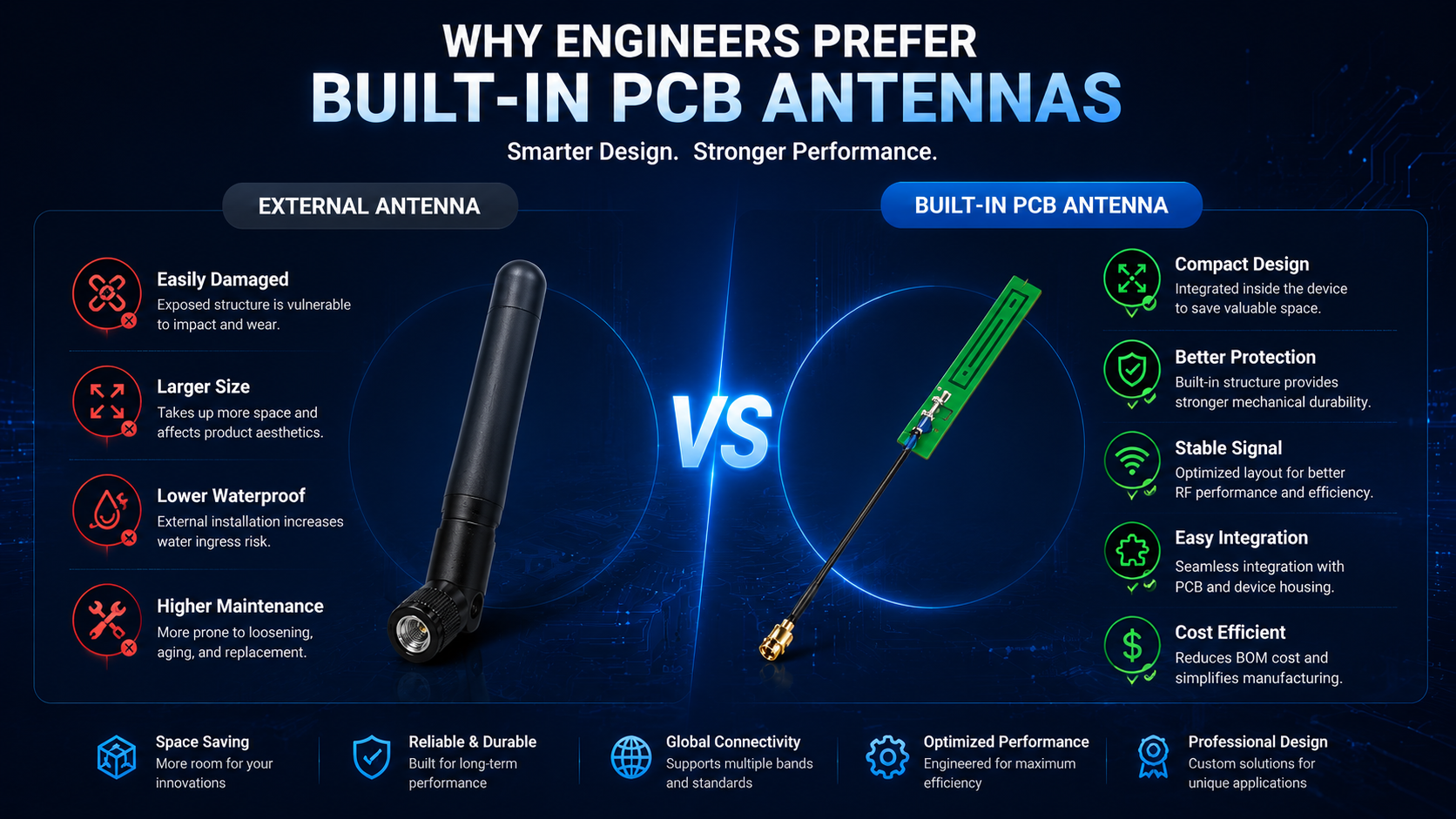
Many product developers are replacing external antennas with built-in PCB antennas for several reasons.
1. Compact Product Design
Modern electronic devices continue to shrink.
A built-in PCB antenna eliminates the need for external antenna structures, allowing engineers to maximize internal space while maintaining an attractive industrial design.
This is especially valuable for:
Smart Sensors
IoT Gateways
POS Terminals
Smart Home Devices
Medical Equipment
Wearable Electronics
2. Full-Band Coverage for Global Connectivity
One of the biggest challenges in global product deployment is supporting multiple wireless standards.
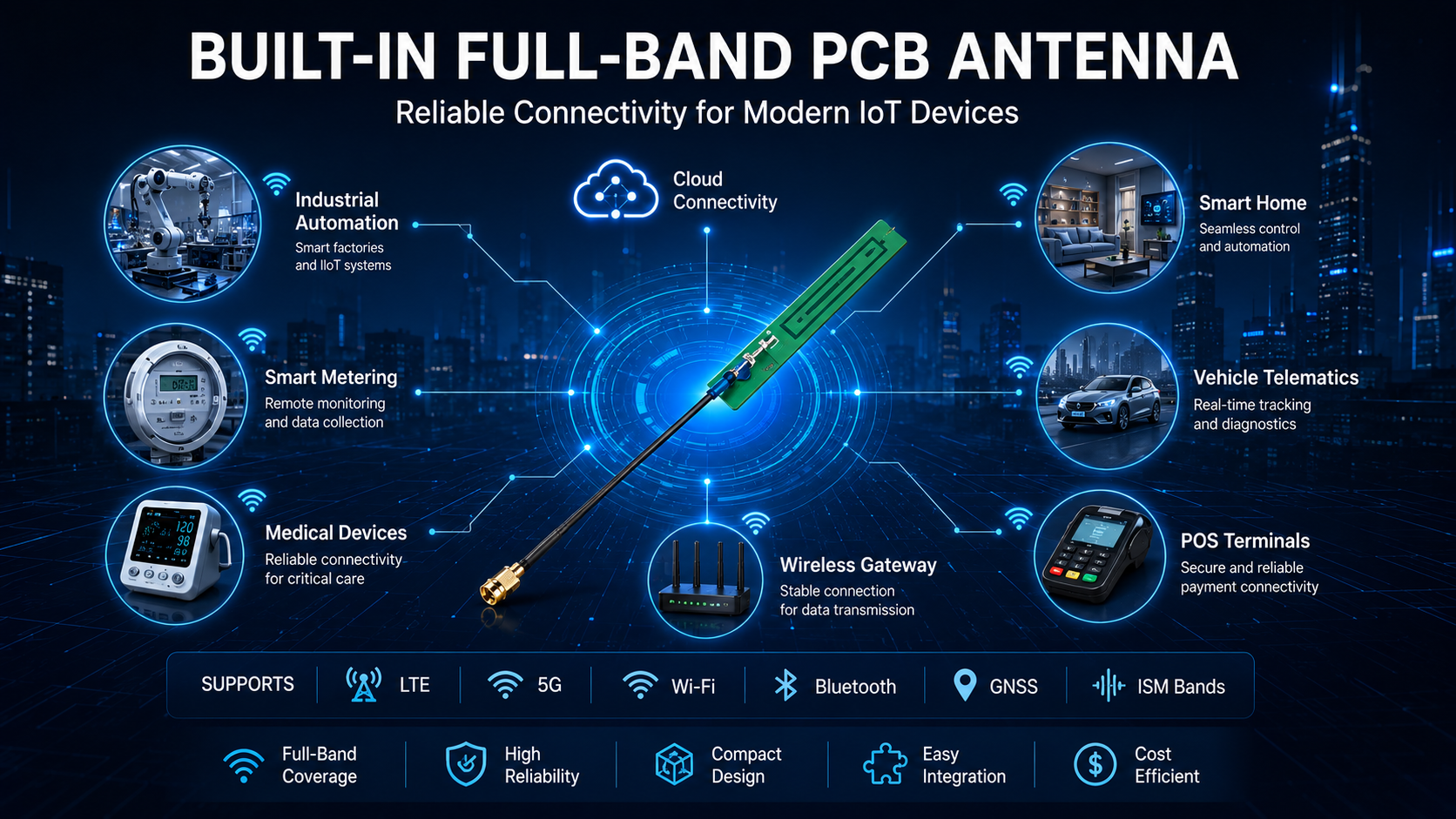
A Built-in Full-Band PCB Antenna can be optimized to support multiple frequency bands, including:
LTE
5G NR
Wi-Fi
Bluetooth
GNSS
ISM Bands
This reduces hardware variations for different regional markets and simplifies product development.
3. Improved Reliability
External antennas are more susceptible to damage during transportation, installation, and long-term operation.
Integrated PCB antennas are protected inside the device enclosure, offering:
Better mechanical durability
Improved waterproof performance
Lower maintenance costs
Higher product reliability
For industrial and outdoor equipment, these advantages directly contribute to longer service life.
4. Better RF Optimization Through Custom Design
A PCB antenna should never be treated as a standard component.
Its performance depends on factors such as:
PCB layout
Ground plane size
Housing materials
Nearby components
Installation environment
Professional RF simulation, impedance matching, and antenna tuning are essential to achieving stable wireless performance. Proper optimization helps reduce signal loss, improve radiation efficiency, and minimize interference. Similar PCB integration challenges are highlighted in WaveLink's own application examples for automotive and IoT devices.
Typical Applications
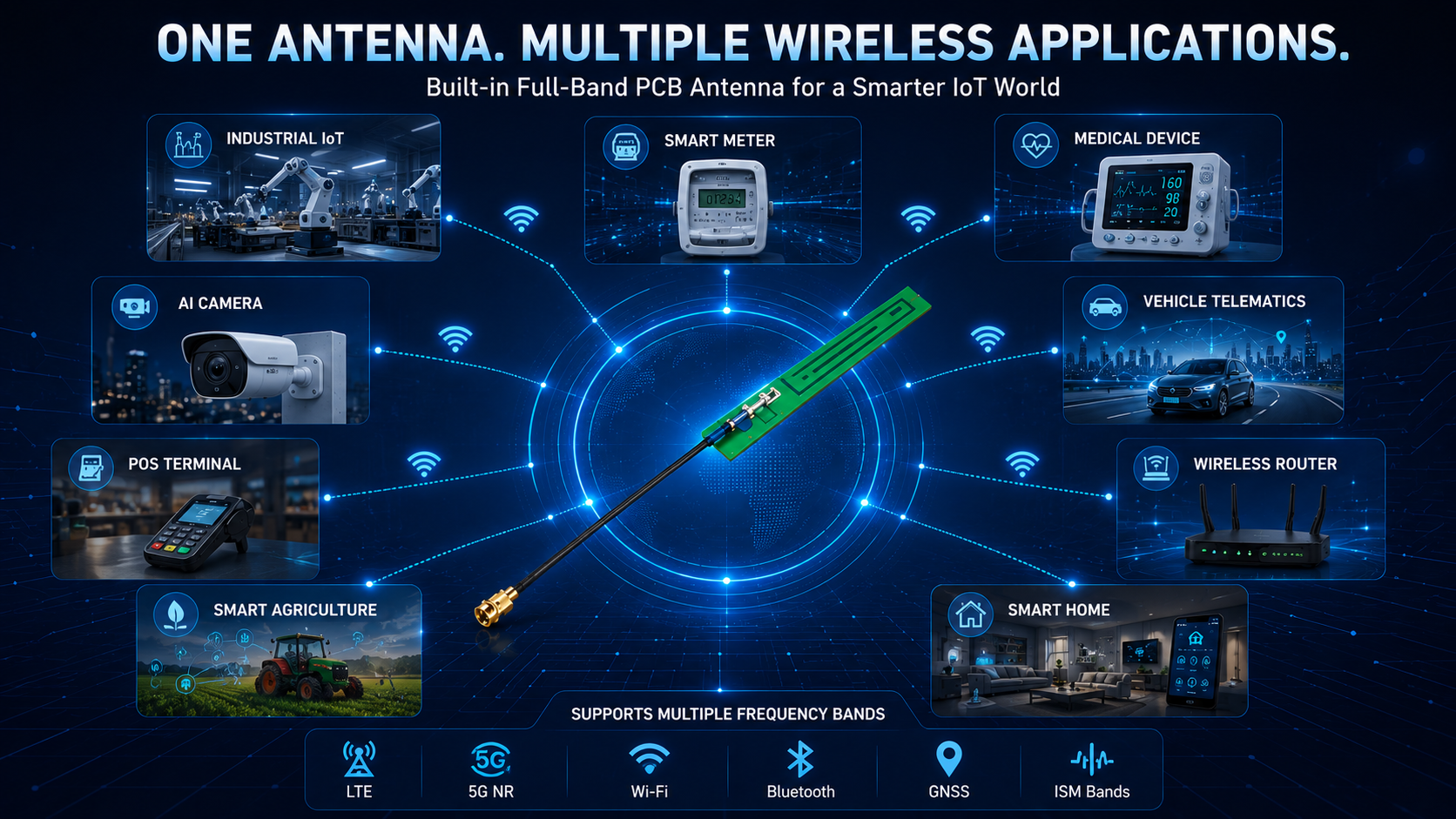
Built-in Full-Band PCB Antennas are widely used in:
✔ Industrial IoT Controllers
✔ Smart Meters
✔ Asset Tracking Devices
✔ Smart Agriculture
✔ Vehicle Telematics
✔ Medical Electronics
✔ Smart Home Gateways
✔ Wireless Routers
✔ AIoT Edge Devices
Why Customization Matters
Every product has unique installation conditions.
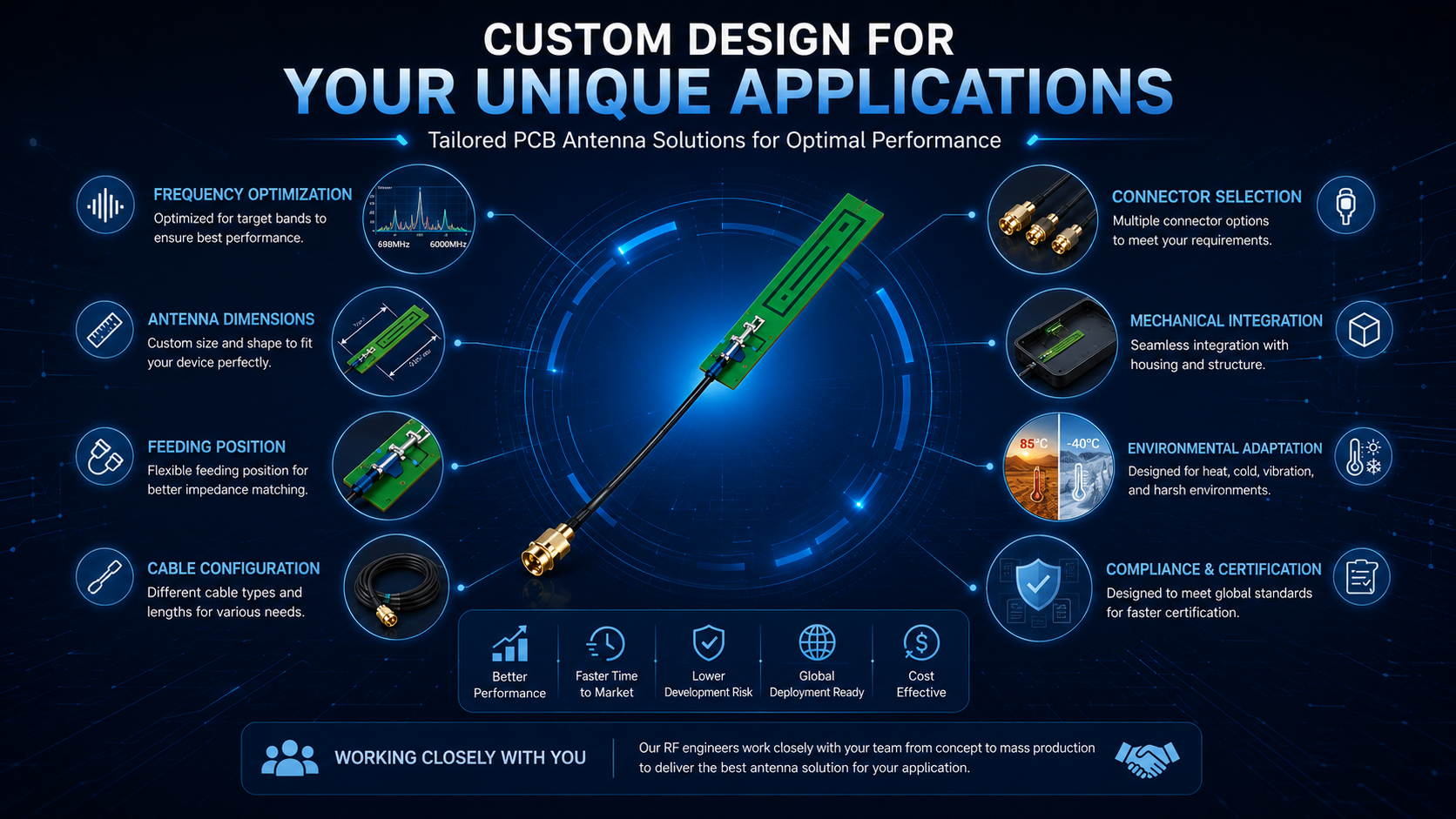
Instead of using a universal antenna, many manufacturers now choose customized PCB antennas designed specifically for their device.
Customization may include:
Frequency optimization
Antenna dimensions
Feeding position
Cable configuration
Connector selection
Mechanical integration
Environmental adaptation
A custom-designed antenna helps shorten product development cycles while improving wireless performance during certification and mass production.
From RF Design to Mass Production
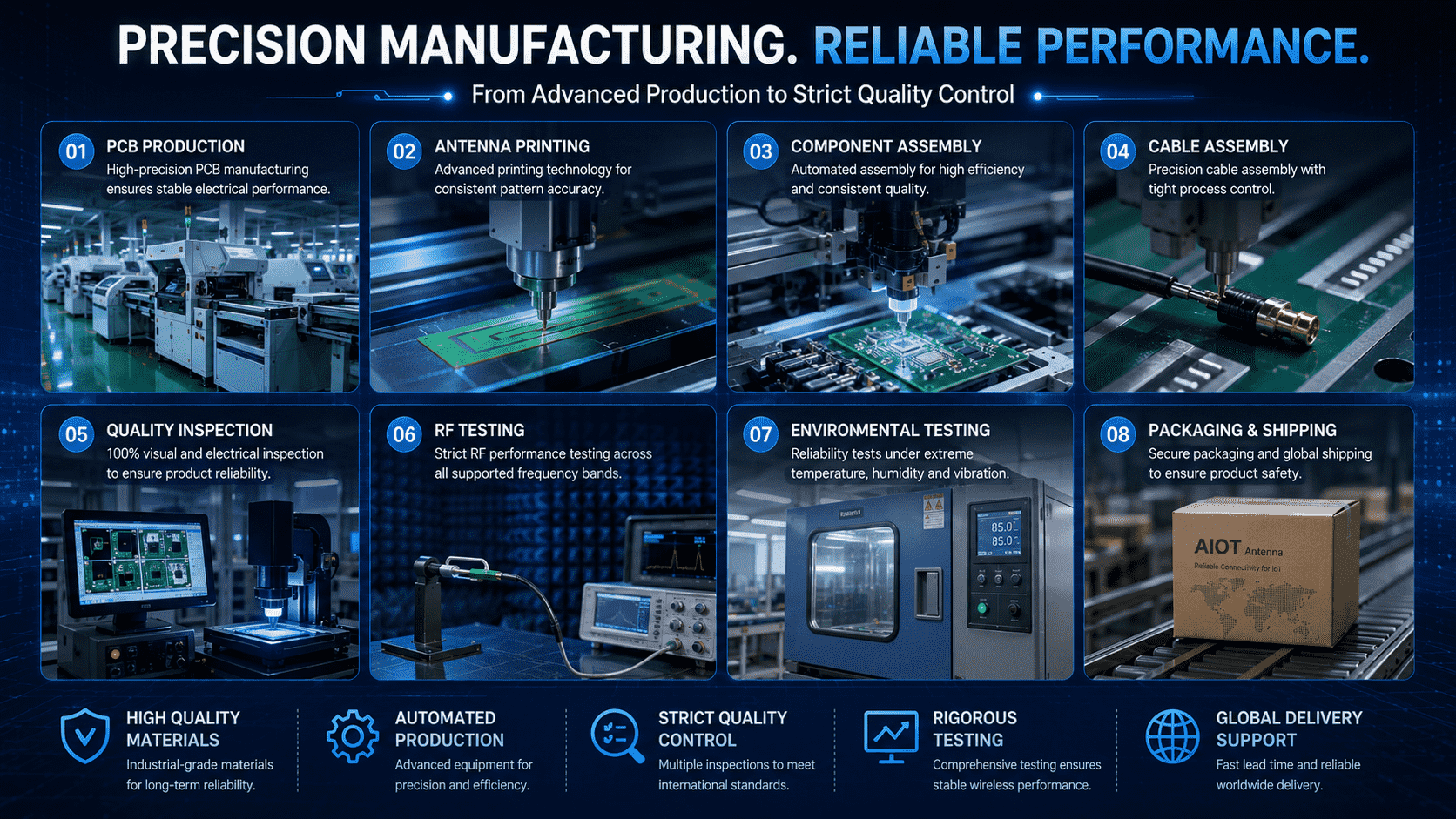
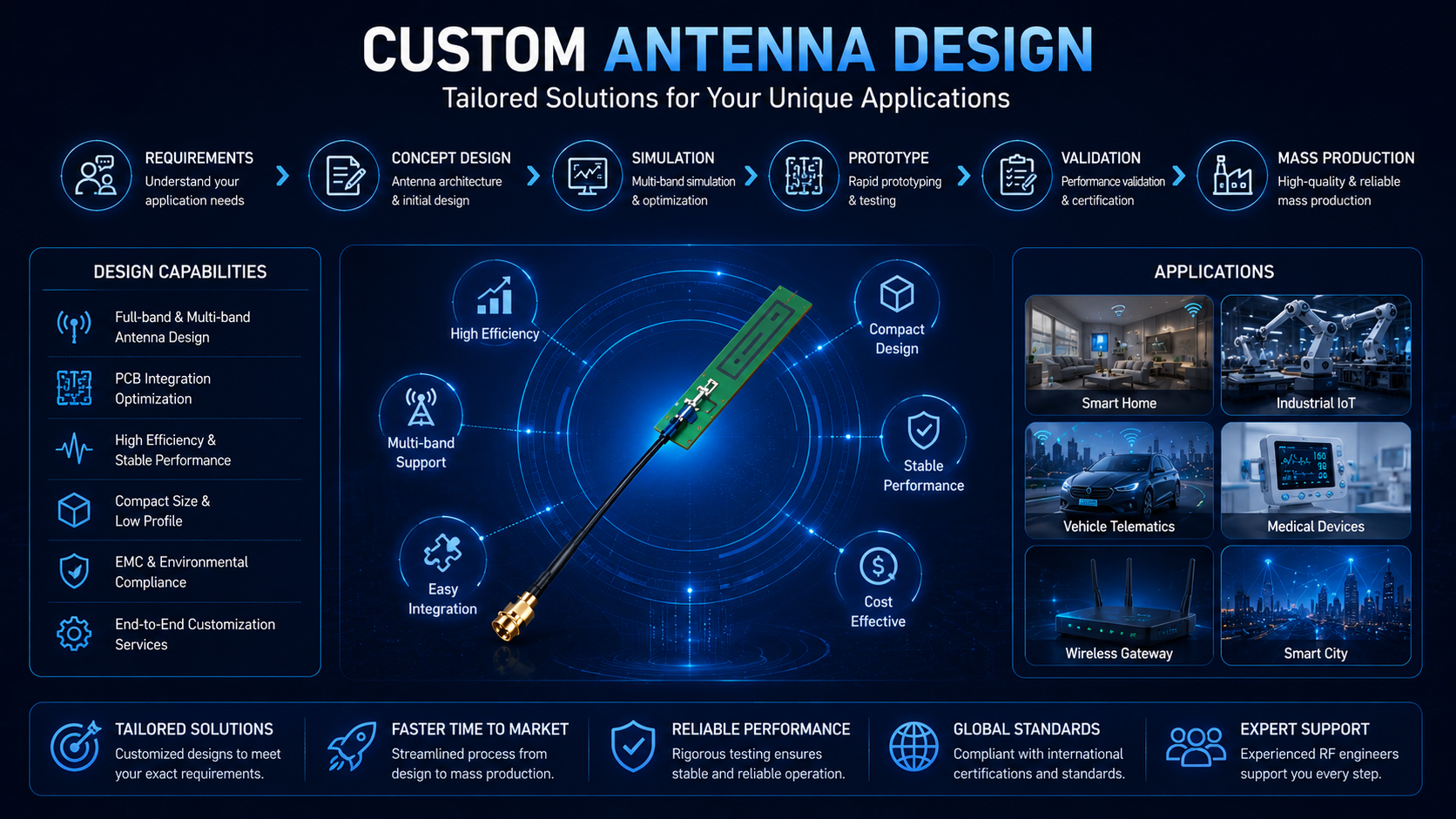
At AIOT Antenna, we support customers throughout the complete antenna development process:
RF Simulation
Antenna Design
Prototype Development
Performance Testing
Impedance Tuning
OTA Validation
Mass Production
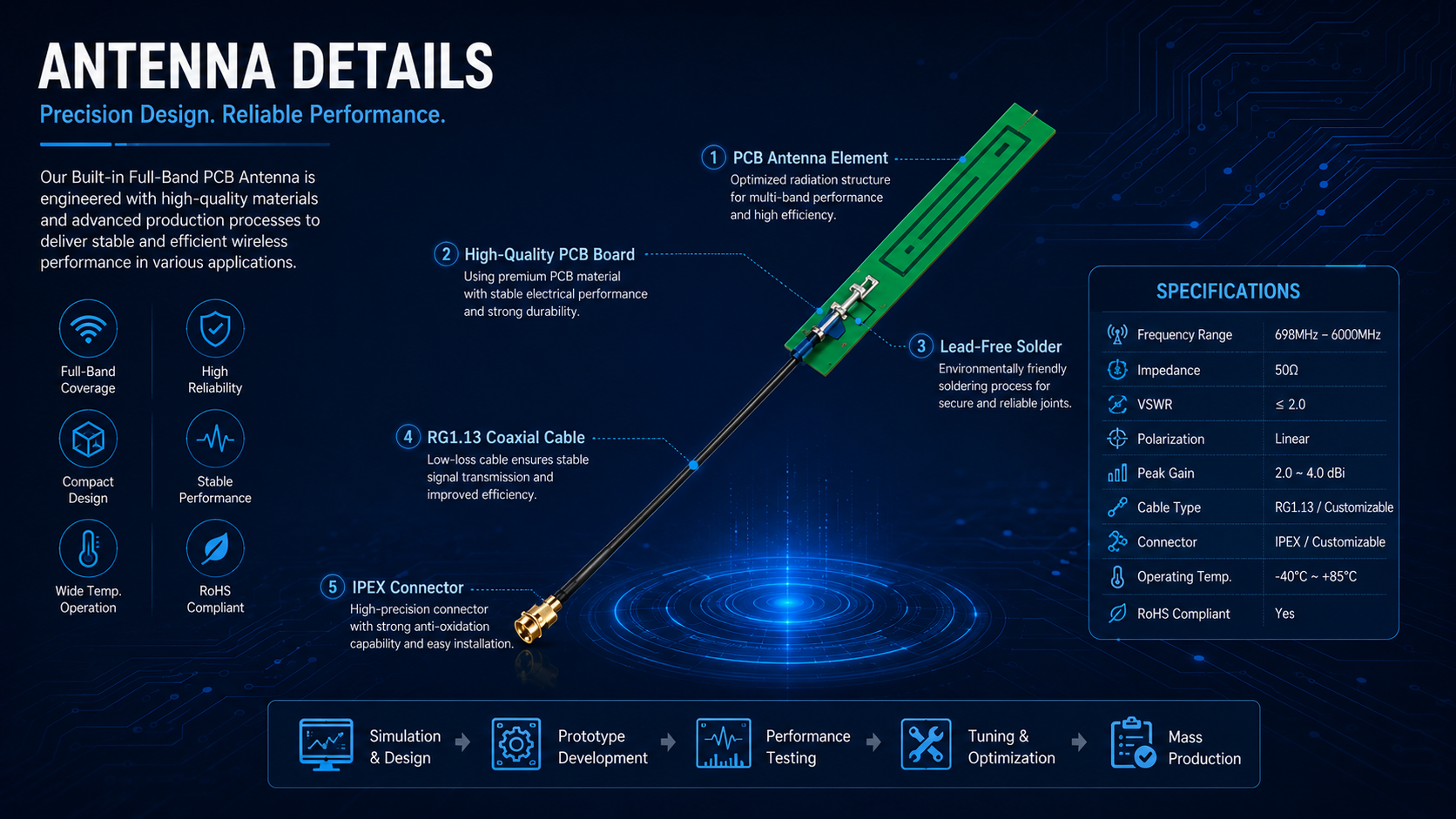
Our engineering team works closely with OEM and ODM manufacturers to develop customized Built-in Full-Band PCB Antenna solutions that meet demanding wireless performance requirements across global IoT applications.
Conclusion
As wireless devices become more compact and connected, antenna performance plays a critical role in overall product reliability.
Choosing a professionally designed Built-in Full-Band PCB Antenna is no longer simply about saving space—it is about improving connectivity, reducing development risk, and preparing products for global deployment.
Whether your application requires LTE, 5G, Wi-Fi, Bluetooth, or multi-band communication, selecting the right integrated antenna solution can significantly enhance long-term product performance.