

What Is an IoT Antenna? A Complete Guide for Beginners 2026
1. What Exactly Is an IoT Antenna?
An IoT antenna is a device that sends and receives wireless signals for Internet of Things products.
Simply put:An IoT antenna is like a “radio ear” for smart devices.It helps gadgets like sensors, trackers, and smart meters send and receive data.
Without an antenna, your smart device cannot “talk” to the internet.Think of it as the bridge between a physical device and the cloud.
For example, the walkie-talkie antenna shown below:

2. Why Do IoT Devices Need a Special Antenna?
Here are the specific reasons why IoT devices require a specialized antenna:
2.1 Operation in Harsh Environments
IoT devices are placed on metal pipes, concrete walls, under soil, or on mobile vehicles. The performance of ordinary antennas will sharply decrease when they are close to metal or humid environments. The design of dedicated IoT antennas takes into account these usage environments, ensuring stable operation under these conditions.
2.2 Multi-Frequency and Multi-Protocol Support
An IoT device may need to support GPS (1.5GHz), Bluetooth (2.4GHz), and LoRa (868/915MHz) simultaneously. Ordinary antennas are usually narrowband and can only operate at one frequency. A dedicated IoT antenna can cover multiple frequency bands within a small device.
2.3 Compact Form Factor
Some IoT devices, such as smartwatches, do not have space to accommodate large external antennas. Specialized IoT antennas such as chip antennas, FPC (flexible printed circuit) or PCB antennas can be installed in millimeter sized spaces while still providing sufficient performance. Ordinary antennas are too large.
3. Common Types of IoT Antennas and Their Characteristics
3.1 Chip Antennas
Chip antenna is an ultra small antenna suitable for compact IoT devices such as smart wearables. It supports multiple frequency bands such as Wi Fi, Bluetooth, and Narrowband IoT, and has the advantages of easy integration and mass production.
3.2 Patch Antennas
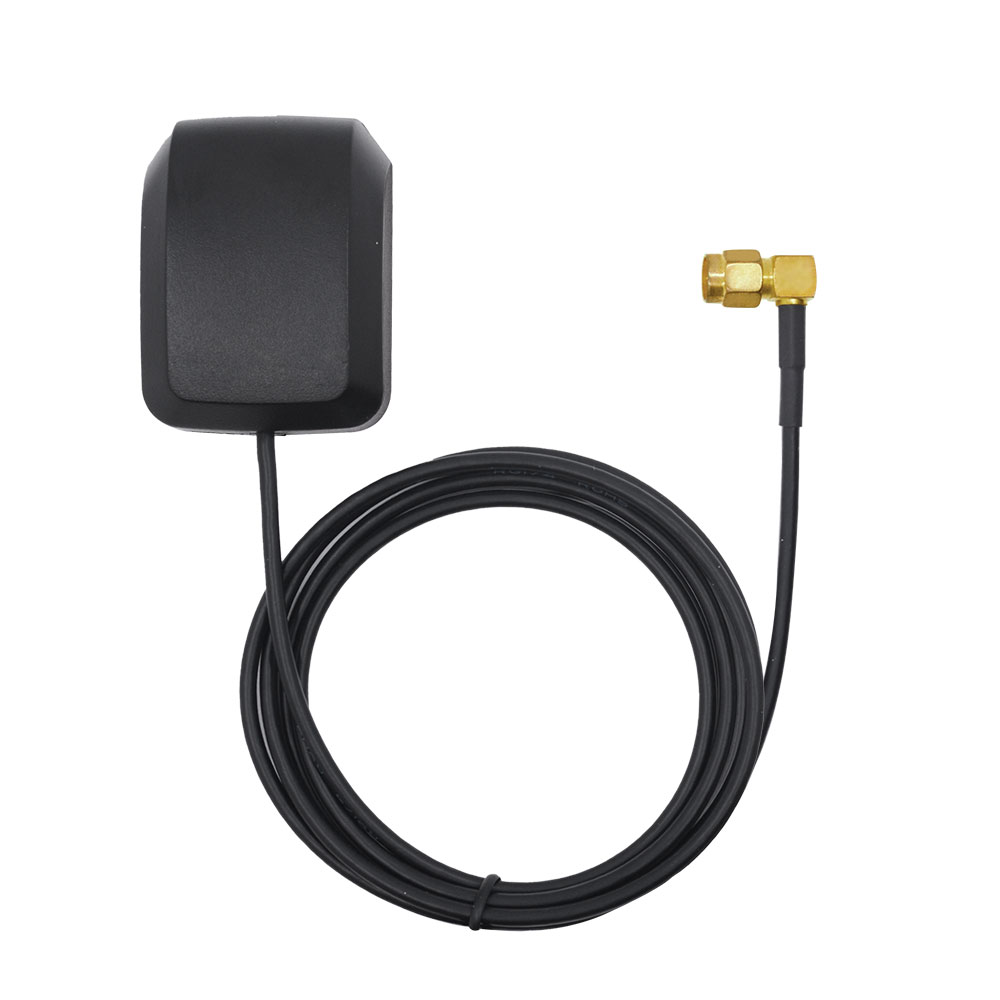
Patch antennas are widely used in GPS/GNSS positioning and vehicle IoT devices, with excellent performance in high-frequency bands such as 1.57542MHz GPS frequency. They feature stable radiation characteristics and high positioning accuracy, and are often designed with waterproof and anti-interference structures.
3.3 PCB Antennas
The PCB antenna is etched onto the device circuit board through copper wiring, with no additional material cost, and is suitable for low-cost IoT devices such as remote controllers and hygrometers.
4. Typical Application Fields of IoT Antennas
4.1 Smart Home
IoT antennas enable wireless interconnection between smart home devices such as smart lights, air conditioners and security cameras. 2.4GHz band antennas are the main choice, realizing short-distance and stable data transmission within the home.
4.2 Connected Vehicles
IoT antenna is the core of vehicle communication system, such as GPS positioning antenna; 4G/5G communication antenna.

4.3 Smart Healthcare
IoT antennas can be applied to wearable medical devices, remote monitoring instruments, medical asset tracking tags, and other devices.
5. Conclusion: Our lives cannot be without IoT antennas
From smart home devices to medical devices, IoT antennas are ubiquitous. With the continuous expansion of the Internet of Things ecosystem, the importance of antennas is becoming increasingly prominent. Modern life has long relied on stable and reliable IoT antennas.
Author: Ying Shun Communication Technology Co., Ltd
Release date: April 7, 2026