

Upgrading your transmitter and receiver to a 2.4GHz mushroom antenna is the ultimate fix for sudden signal drops. Here is why professional hardware integrators insist on this exact upgrade.
1. Eliminating Polarization Mismatch
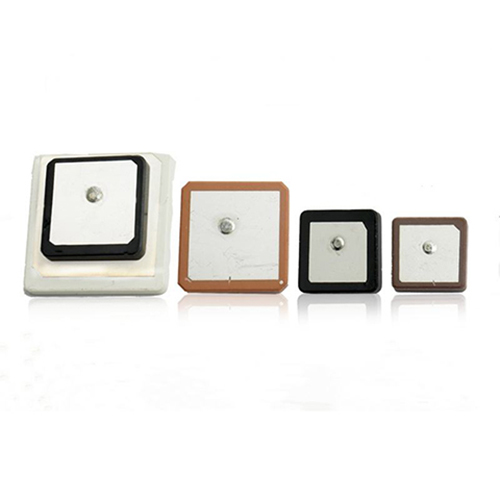
A standard linear antenna only transmits well when the receiver antenna is perfectly parallel to it. When your drone banks aggressively into a turn, the onboard antenna tilts. This physical tilt creates a "cross-polarization" mismatch, instantly dropping your signal strength by up to -20dB and triggering an emergency failsafe.
A mushroom antenna utilizes a Circular Polarized (CP) internal element. It broadcasts the 2.4GHz control signal in a continuous corkscrew pattern. No matter how wildly the drone rolls or pitches, the connection remains locked-in.
2. Rejecting Urban RF Smog
The 2.4GHz ISM band is incredibly crowded with Wi-Fi routers, Bluetooth devices, and industrial noise. A standard linear antenna absorbs all of this background interference. A CP mushroom antenna (either RHCP or LHCP) is geometrically engineered to reject cross-polarized noise, cutting through urban RF smog and significantly improving your true control range.
3. Rugged Radome Protection
For field operators, exposed antenna wires are a major liability. The plastic "mushroom" dome is a heavy-duty, ultrasonically welded radome. It protects the precision-tuned internal copper lobes from impacts, ensuring the VSWR remains perfectly stable so your RC transmitter module does not overheat.
Need Custom 2.4GHz UAV Antennas? We manufacture high-gain 2.4GHz mushroom antennas for commercial drone fleets and security integrators. Available with custom SMA/U.FL connectors and guaranteed VNA test reports. [Contact Our RF Engineers for B2B Pricing]