Why RF Connectors Matter in Wireless Communication
In modern wireless products, engineers usually focus on antennas, wireless modules, and communication chips. However, the RF connection between these components is equally important.
A high-performance antenna cannot deliver reliable communication without a stable RF signal path.
This is why RF connectors play a critical role in wireless systems.
An RF coaxial connector is a precision component designed to connect antennas, coaxial cables, and RF circuits while maintaining signal quality and impedance control.
Today, RF connectors are widely used in:
IoT devices
GPS tracking systems
4G/5G communication equipment
Automotive electronics
Industrial wireless systems
RF testing equipment
For engineers and purchasing teams, understanding where RF connectors are installed helps select the right connector solution for each application.
What Is an RF Coaxial Connector?
An
RF coaxial connector is a component used to connect RF transmission lines and electronic devices.
Unlike standard electrical connectors,
RF connectors are designed for high-frequency signal transmission.
The main advantages include:
Stable signal transmission
Controlled impedance
Reduced signal loss
Better protection against electromagnetic interference
Wireless antennas
GPS modules
WiFi devices
Cellular communication systems
Industrial IoT products
Common RF connector structures include:
Metal housing
Conductive contact terminals
PTFE insulation materials
These designs help improve electrical performance and mechanical reliability.
Where Are RF Connectors Installed?
RF connectors can be installed in different positions depending on product design.
The most common locations include:
PCB boards
Antenna interfaces
Communication equipment
Testing systems
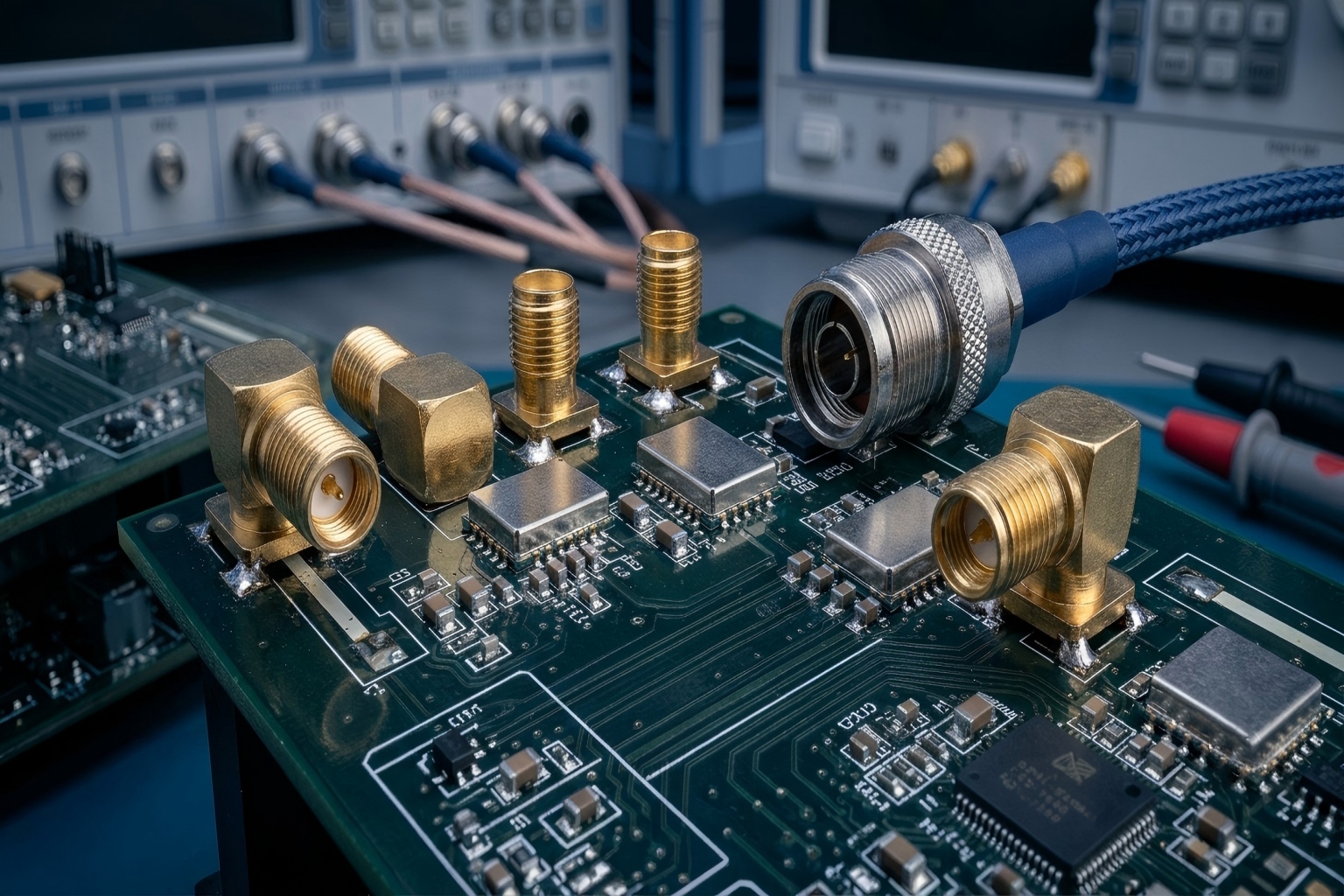
1. PCB Mount RF Connectors Inside Wireless Devices
One of the most common applications is installing RF connectors directly onto a PCB.
A PCB Mount RF Connector provides the connection between the internal RF circuit and an external antenna.
Typical applications include:
IoT gateways
Wireless routers
GPS tracking devices
Smart meters
Industrial controllers
SMA Connector Application
The SMA Connector is one of the most widely used RF connectors in compact wireless products.
Because of its small size and threaded connection design, SMA connectors are commonly used in:
GPS modules
WiFi equipment
4G LTE devices
5G communication products
RF development boards
2. RF Connectors Between Antenna and Cable
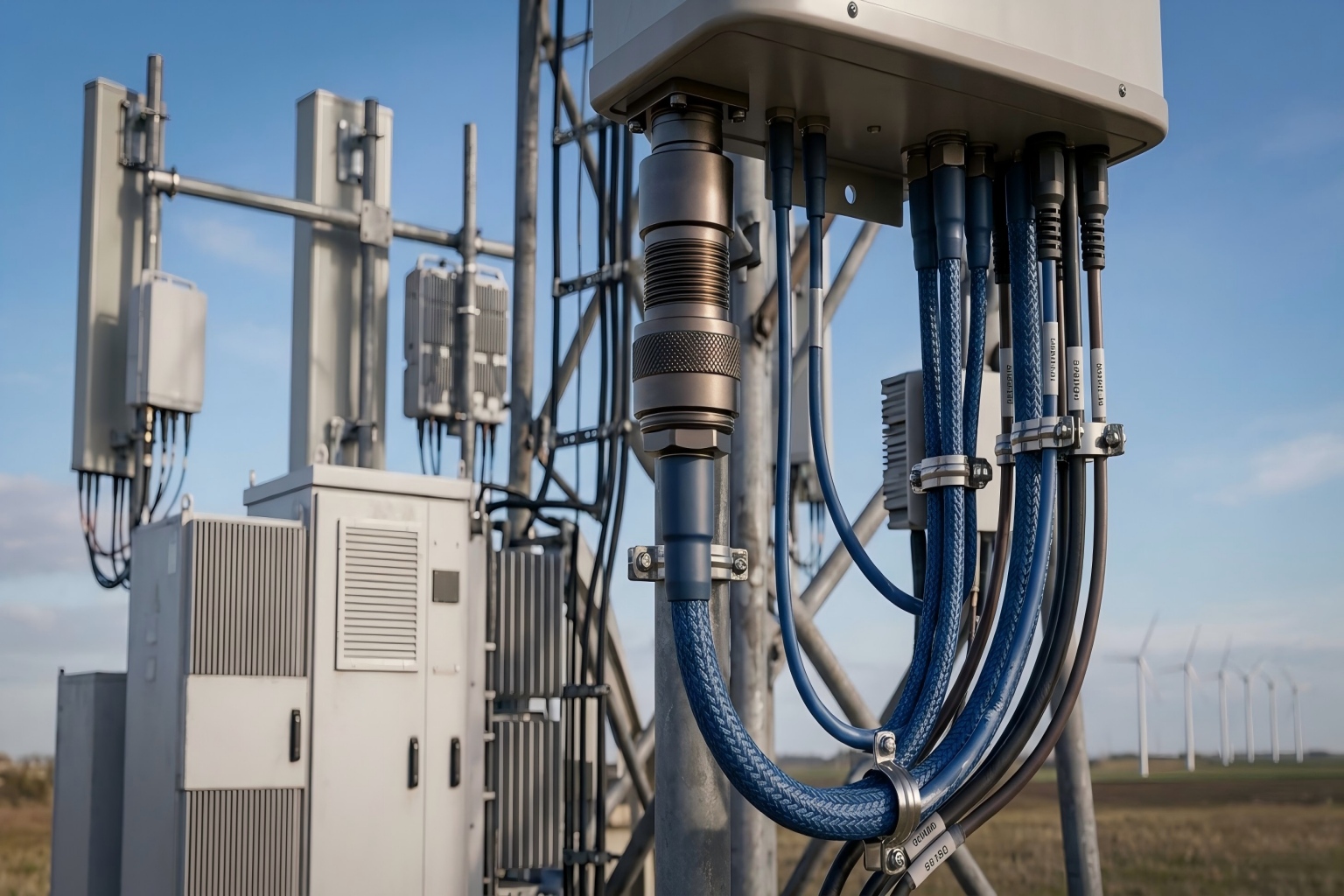
Another important installation location is between antennas and coaxial cables.
Many external antennas use an Antenna RF Connector because it allows:
Easy installation
Antenna replacement
Product maintenance
Flexible customization
Typical applications include:
WiFi antennas
GPS antennas
4G/5G antennas
LoRa antennas
Vehicle antennas
Common connector types include:
SMA
RP-SMA
TNC
N-Type
For outdoor wireless systems, N-Type connectors are often selected because they provide stronger mechanical reliability and better environmental protection.
They are commonly used in:
Outdoor communication antennas
Wireless base stations
Industrial networking equipment
3. RF Connectors in Automotive and Smart Transportation Systems
Modern vehicles increasingly rely on wireless communication technologies.
Automotive systems use RF connectors to connect antennas with communication modules, including:
GPS positioning systems
Cellular communication modules
Vehicle gateways
Telematics systems
Typical installation locations include:
Vehicle roof antennas
TCU modules
GNSS receivers
Fleet management devices
GPS and 4G/5G Communication Applications
GPS antennas require stable RF connections to maintain accurate positioning.
RF connectors are used between:
GPS antenna cable
GNSS module
Vehicle communication controller
Connected vehicles also use cellular antennas to communicate with cloud platforms.
RF connectors help maintain reliable signal transmission between:
4G/5G antenna
Cellular modem
Vehicle gateway

4. RF Connectors in Industrial IoT Systems
Industrial IoT applications require reliable wireless communication in complex environments.
RF connectors are widely installed in:
Industrial gateways
Smart factories
Remote monitoring systems
Smart agriculture equipment
Energy management systems
An industrial IoT gateway may integrate multiple wireless technologies:
4G LTE
5G
WiFi
LoRa
GNSS
The RF connector provides the connection between wireless modules and external antennas.
Engineers usually consider:
Frequency range
Connector size
Installation method
Environmental conditions

How to Choose the Right RF Connector?
Choosing the correct RF connector requires considering several technical factors.
1. Frequency Range
The connector must support the operating frequency of the wireless system.
Typical applications:
Application Frequency
GPS 1.575 GHz
WiFi 2.4GHz / 5GHz
4G LTE 700MHz-2600MHz
5G Sub-6GHz
LoRa 433MHz / 868MHz / 915MHz
An unsuitable connector may cause:
Signal loss
Higher VSWR
Reduced communication distance
2. Connector Size
Modern electronic products require smaller components.
For compact devices, engineers often select:
Advantages:
Compact size
Reliable threaded connection
Good RF performance
Applications:
GPS equipment
IoT products
Wireless modules
Micro RF connectors are also used in:
Wearable devices
Embedded systems
Miniature communication products
3. Installation Environment
Different environments require different connector designs.
Indoor applications:
Wireless routers
Consumer electronics
Development equipment
Outdoor applications:
Base stations
Outdoor antennas
Industrial communication systems
Outdoor products usually require:
Strong mechanical structure
Weather resistance
Stable RF performance
SMA vs N-Type vs BNC RF Connector Comparison
Connector Type Main Feature Typical Applications
SMA Compact threaded design GPS, WiFi, IoT devices
N-Type Strong outdoor reliability Base stations, outdoor antennas
BNC Quick locking connection Test equipment
Why Choose a Professional RF Connector Manufacturer?
For wireless product developers, selecting the right supplier is important.
A reliable RF Connector Manufacturer should provide:
Custom RF Solutions
Including:
Connector customization
Cable assemblies
Mechanical design support
Application-specific solutions
Antenna and Connector Integration
Because antennas and connectors directly affect RF performance, professional suppliers should understand both systems.
This helps optimize:
Signal performance
Product reliability
Mechanical structure
Quality Control
Important testing includes:
RF performance testing
Mechanical testing
Signal loss evaluation
Material inspection
AIOT ANTENNA RF Connector Solutions
AIOT ANTENNA provides RF connection solutions for wireless communication products.
Our solutions include:
PCB mount RF connectors
Antenna connectors
Customized RF solutions
With engineering support from design to mass production, we help customers develop reliable wireless products for:
IoT
Automotive electronics
Industrial communication
Smart devices
From Design To Mass Production
Frequently Asked Questions
What is an RF connector used for?
RF connectors are used to connect antennas, coaxial cables, and RF circuits while maintaining reliable high-frequency signal transmission.
They are widely used in wireless communication equipment, IoT devices, GPS systems, and industrial applications.
Where are RF connectors installed?
RF connectors are mainly installed:
1.On PCB boards inside wireless devices
2.Between antennas and coaxial cables
3.Inside communication and testing equipment
Are RF connectors important for antenna performance?
Yes.
Although antennas transmit and receive wireless signals, RF connectors directly affect signal quality.
Poor-quality connectors may cause:
Signal loss
Higher VSWR
Unstable communication performance
A reliable RF connection is essential for stable wireless communication.
Conclusion
RF connectors are small components, but they play a major role in wireless system performance.
From PCB-mounted connectors inside IoT devices to outdoor antenna connections in communication networks, choosing the correct RF connector helps improve signal reliability and product performance.
Frequency range
Connector type
Installation environment
Electrical performance
Application requirements
AIOT ANTENNA helps global customers build reliable wireless solutions with professional
RF connector and antenna technologies.