

Understanding RF Connector Self-Locking Technology
Based on our practical engineering at AIOT ANTENNA,in RF systems, a connector is not merely responsible for signal transmission; its mechanical structure directly affects long-term connection reliability and signal integrity.
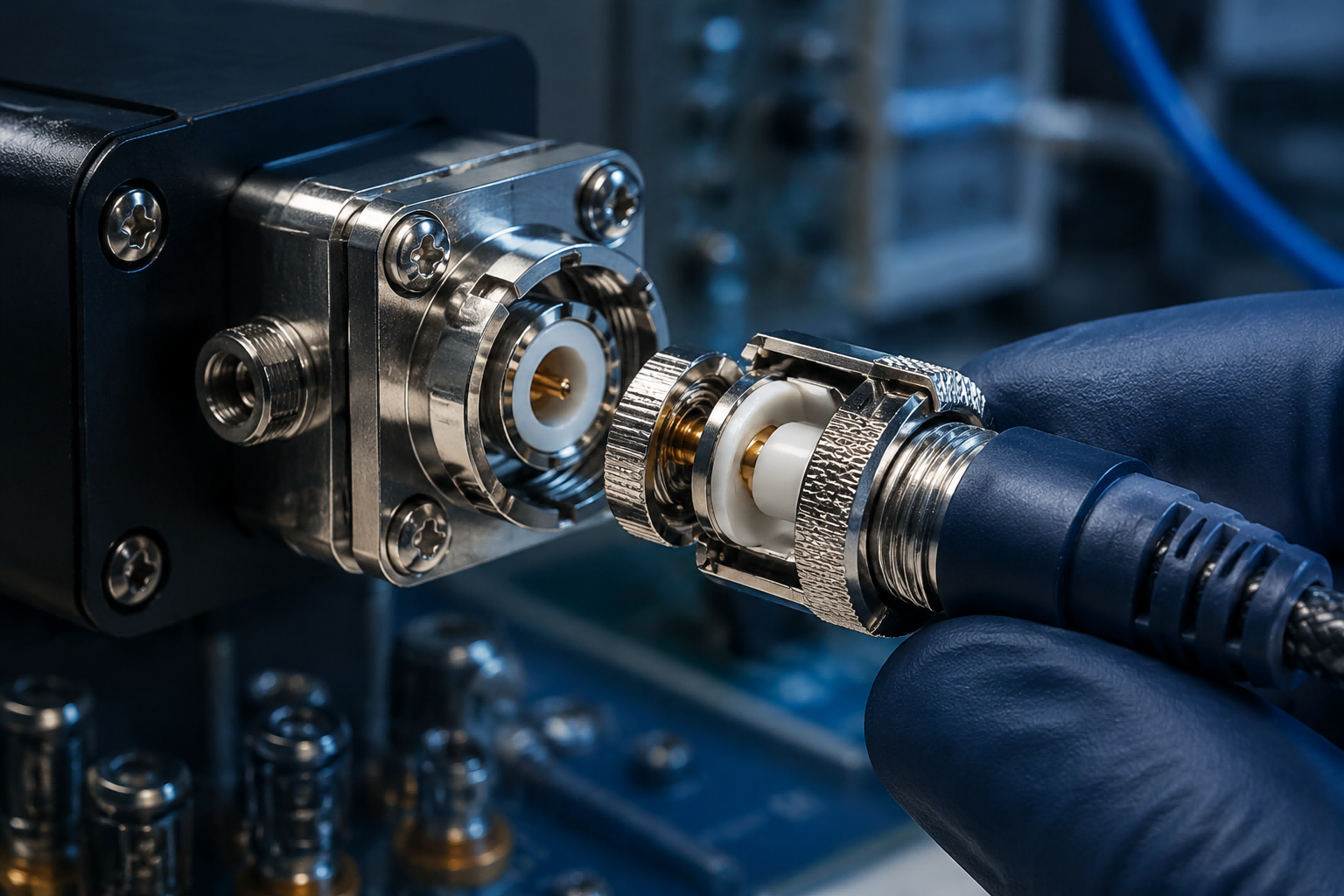
The self-locking function of a RF Coaxial Connector refers to the interface's ability to maintain stable, rigid contact after engagement. Through continuous contact between the outer conductor of the connector and the mating interface, the RF path maintains continuous electromagnetic shielding, optimal impedance, and stable electrical performance even under harsh operating conditions.
For demanding applications such as industrial equipment, wireless communication infrastructure, and IoT terminals, a reliable self-locking RF connector design prevents signal interruption caused by mechanical vibration, thermal expansion, or physical impact.
What Is the Self-Locking Function of a Coaxial Connector?
A standard coaxial connector consists of three key components:
Inner conductor
Dielectric support
Outer conductor
During connection, the outer conductor contacts the mating connector to create a complete conductive shielding enclosure.
Key benefits of a self-locking coaxial structure:
Continuous Outer Conductor Engagement: Prevents intermittent disconnects under vibration.
Enhanced Shielding Effectiveness: Maintains high isolation and minimizes unwanted signal leakage.
Stable RF Transmission: Protects against impedance fluctuations across broad operating frequencies.
In high-frequency and microwave applications, mechanical stability directly determines electrical performance. Unstable contact degrades Voltage Standing Wave Ratio (VSWR) and introduces insertion loss.
Key Factors When Selecting an RF Coaxial Connector
When selecting an RF Coaxial Connector, engineering teams must evaluate electrical specifications, mechanical durability, and operating environments.
1. Impedance Matching and Frequency Range
Most industrial wireless communication systems mandate a 50Ω nominal impedance.
The connector, coaxial cable assembly, and RF module must maintain strict impedance continuity. A mismatch between 50Ω and 75Ω systems creates signal reflection, increases return loss, and reduces total system transmission efficiency.
Engineering Tip: For high-reliability setups, select connectors that ensure a VSWR < 1.3 across the target operating spectrum (e.g., DC to 6 GHz or up to 18 GHz).
2. Connector Structure and Locking Method
Different deployment scenarios call for specific interface mechanisms. While quick-connect designs are convenient for frequent testing, threaded or push-pull self-locking connectors provide superior mechanical retention for permanent outdoor or vehicular installations.
3. Installation Space and Environmental Resistance
Industrial devices often present compact layouts or extreme operating environments. Engineers must factor in:
Available physical clearance
Temperature resistance (e.g., -40°C to +85°C or higher)
Vibration and shock resistance
Cable bend radius and routing requirements

RF Connector Types for Different Applications
SMA Connector
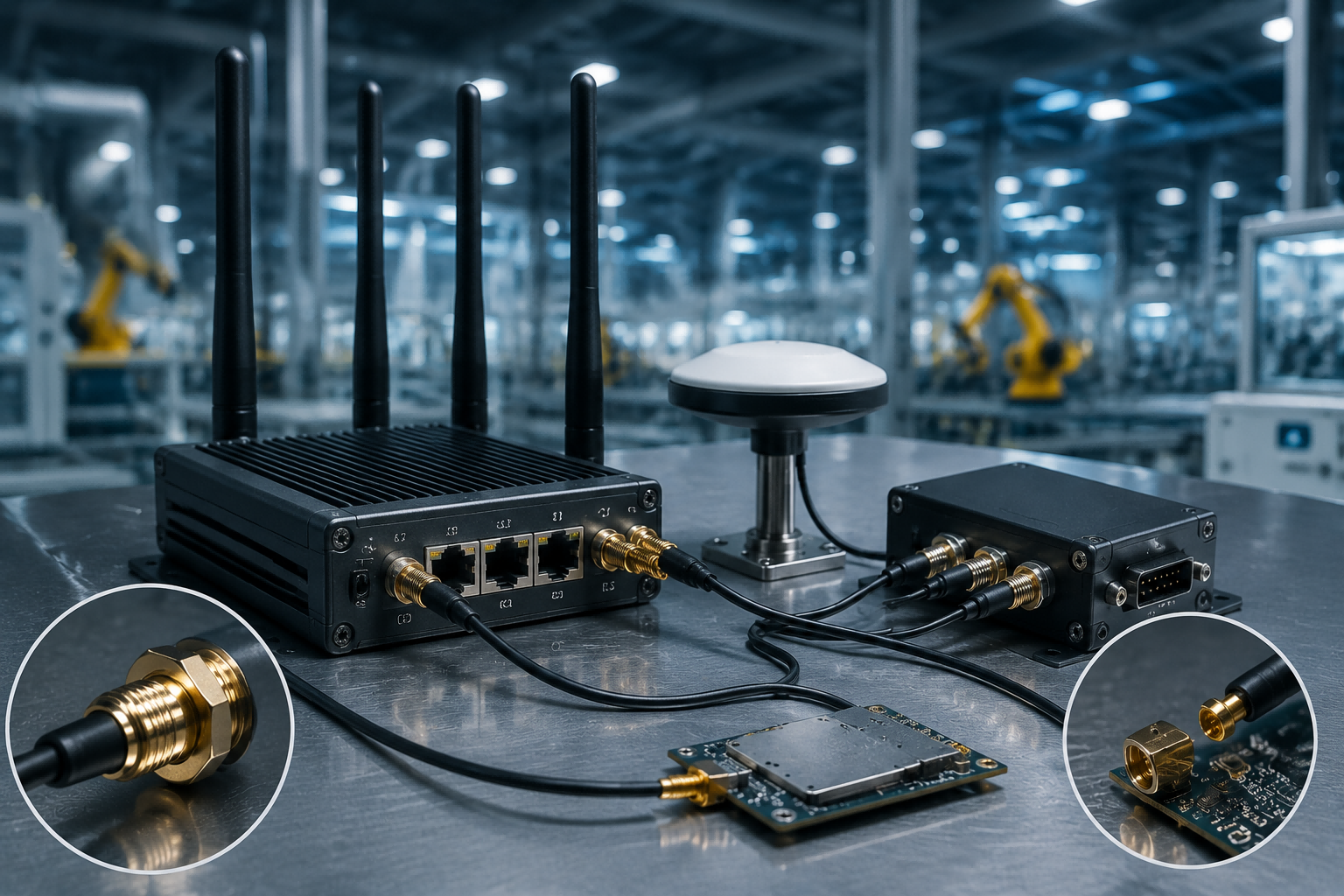
The SMA Connector is a staple in wireless communications, GPS/GNSS equipment, IoT gateways, and RF test systems. Its threaded coupling mechanism provides excellent mechanical stability and reliable RF performance up to 18 GHz.
MMCX Connector
The MMCX Connector is engineered for space-constrained applications. Operating from DC to 6 GHz, this micro-miniature interface is widely used in embedded modules, compact GNSS receivers, and lightweight IoT sensors.
N-Type Connector
Designed for heavy-duty industrial and outdoor communication systems, the N-Type Connector handles higher power levels across frequencies up to 11 GHz. Featuring rugged threaded locking and IP67 weather-proofing capability, it is ideal for base station antennas and rugged RF infrastructure.
Reverse Polarity SMA (RP-SMA) and Custom RF Connector Designs
Different wireless standards require varied interface configurations to prevent unauthorized antenna connection. Reverse Polarity SMA (RP-SMA) connectors are widely deployed in modern Wi-Fi and IoT devices where pin/socket arrangements differ from standard SMA interfaces.
In complex RF systems, an RF Coaxial Adapter can also be used to connect different connector interfaces while maintaining signal compatibility between antennas, cables, and wireless modules.
At AIOT ANTENNA, our engineering team optimizes outer conductor geometries and spring-contact mechanisms to ensure every customized connector maintains low contact resistance and high mechanical durability over repeated mating cycles.
Primary Applications for Self-Locking RF Connectors
Self-locking RF connectors play a critical role across diverse industrial sectors:
IoT & M2M Communication Equipment
GPS / GNSS Tracking & Navigation Systems
Wireless Base Stations & Automotive Terminals
RF Precision Testing Equipment
Industrial Automation & Robotics
RF Connector Manufacturer & Custom Solutions
AIOT ANTENNA delivers end-to-end RF connector and custom antenna solutions tailored to your project requirements. As an OEM/ODM RF Connector Manufacturer, our capabilities include:

Custom RF Connector & Interface Design
Standard SMA, MMCX, and N-Type Connector Manufacturing
Low-Loss RF Cable Assembly Development
Integrated Antenna + Connector Customization
Rapid Prototype Testing & High-Volume Production
At AIOT ANTENNA, our engineering team collaborates directly with system designers to match connectors with exact frequency bands, VSWR targets, enclosure dimensions, and environmental ratings.
Need a Custom RF Connector Solution?
Whether you are facing strict board space limits, high-vibration automotive environments, or custom frequency demands, AIOT ANTENNA provides tailored RF solutions for IoT, GNSS, and industrial wireless systems.
Contact AIOT ANTENNA today for:
Engineering & Technical Evaluation
Custom RF Connector Development
Complete RF System Integration Support
Request an RF Connector Quote. Discuss your application requirements directly with our engineering team at https://www.aiotantenna.com.
Frequently Asked Questions (FAQ)
Q1: What is the self-locking function of an RF connector?
It is a mechanical feature that keeps the connector interfaces firmly mated, preventing physical disconnection caused by vibration and ensuring stable electrical performance.
Q2: Why is 50Ω impedance matching critical for RF connectors?
Matching impedance across connectors, cables, and modules minimizes RF signal reflection, lowers insertion loss, and maximizes total power transfer efficiency.
Q3: What is the main difference between an SMA Connector and an MMCX Connector?
SMA connectors utilize a threaded lock for high mechanical strength and support frequencies up to 18 GHz, whereas MMCX connectors offer a significantly smaller footprint for space-constrained PCB boards up to 6 GHz.
Q4: Can AIOT ANTENNA provide custom OEM RF Connector solutions?
Yes. AIOT ANTENNA supports full-cycle custom engineering, from initial schematic evaluation and prototype testing to mass production and cable harness assembly.